

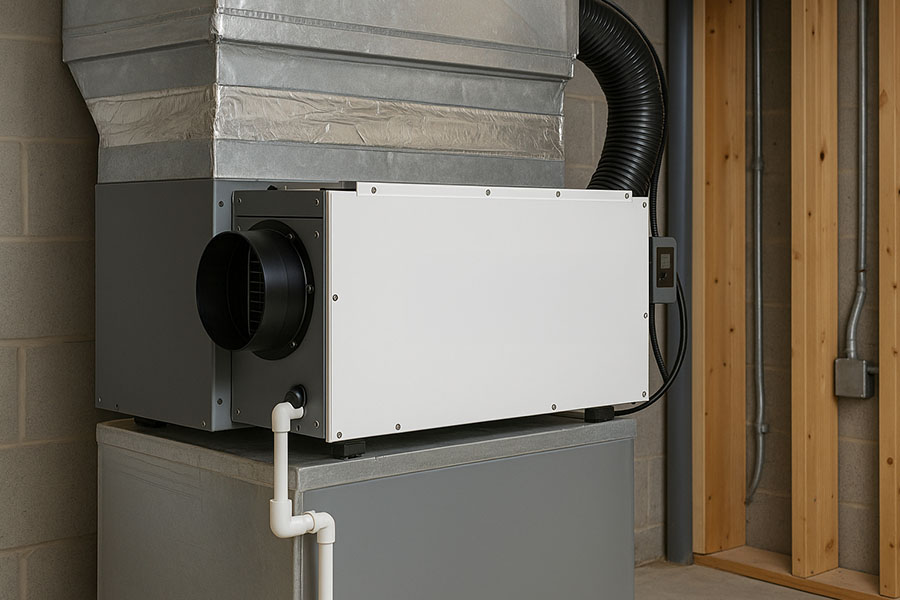
Install a whole-house dehumidifier when your home shows persistent condensation on windows, musty odors, worsening allergy symptoms, or indoor humidity that stays above 50 percent even while the AC runs. Those signs mean your cooling system alone is not removing enough moisture, which is common in the humid stretches North Texas gets from late spring through early fall. Working with homeowners across Grand Prairie, we see this most often in houses near Joe Pool Lake and Mountain Creek Lake, where ambient moisture runs higher than the rest of the Metroplex. Here is how to tell whether your home needs one.
How Does Grand Prairie Humidity Affect Your Home?
High humidity forces your HVAC system to work harder for less comfort, because removing moisture consumes cooling capacity that would otherwise lower the temperature. That is why a house at 74 degrees and 60 percent humidity feels worse than the same house at 76 degrees and 45 percent humidity.
The operating cost follows directly. A system spending its capacity on latent load runs longer cycles, which raises your bill without making the house feel better.
Condensation on windows and interior walls is the visible warning. It means indoor moisture has reached the point where it condenses on the coolest surfaces in the room, and those surfaces stay damp long enough to support growth.
Balanced humidity does more than improve comfort. It protects hardwood flooring, cabinetry, trim, and musical instruments from the seasonal expansion and contraction that eventually shows up as gaps and warping.
Local geography matters here. Homes closer to the lakes and the Trinity River corridor carry a higher baseline moisture load than homes further inland, and the difference is large enough to change what equipment a house actually needs. Clean coils, clear condensate drainage, and correct airflow all support moisture removal, which is why humidity problems often trace back to routine service that got skipped.
What Are the Signs You Need a Whole-House Dehumidifier?
The clearest sign you need a whole-house dehumidifier is indoor humidity that stays above 50 percent while your air conditioning is running normally. At that point, the cooling system has reached the limit of what it can remove on its own.
Three specific symptoms should prompt a measurement:
- Frequent condensation: Moisture on windows, exterior walls, or supply registers means the dew point inside your home is too high for the surfaces in it.
- Persistent musty odors: A musty smell that returns after cleaning almost always indicates active microbial growth somewhere with a steady moisture supply.
- Allergy and respiratory flare-ups: Dust mites and mold both thrive above 55 percent relative humidity, so symptoms that worsen indoors point at moisture rather than pollen.
A basic hygrometer settles the question for under twenty dollars. Take readings in several rooms and at different times of day, because a single hallway reading rarely represents the whole house.
If the numbers confirm the problem, the fix depends on the cause. Sometimes it is a sizing issue with the existing equipment, sometimes it is ventilation, and sometimes dedicated dehumidification is the right answer. Adding in-home air exchangers addresses a related but distinct problem, delivering controlled fresh air rather than removing moisture, and the two solutions are often complementary.
What Are the Benefits of a Whole-House Dehumidifier?
A whole-house dehumidifier delivers consistent humidity control across every room, which portable units cannot do. It removes moisture at the air handler and distributes dry air through the existing ductwork rather than treating one space at a time.
The comfort improvement is immediate and noticeable. Lower humidity makes the same thermostat setting feel several degrees cooler, which means many homeowners raise their setpoint after installation and save energy without giving up comfort.
Indoor air quality improves for a specific reason. Dust mites, mold, and mildew all require elevated humidity to reproduce, and holding the house below 50 percent removes that condition. For households with allergy or asthma sufferers, that change is often the most meaningful one available.
Your belongings benefit too. Stable humidity protects hardwood floors, solid wood furniture, artwork, and electronics from the moisture cycling that causes warping, joint failure, and corrosion over time.
There is an efficiency benefit as well. When the dehumidifier handles the latent load, your air conditioner spends its capacity on temperature rather than moisture, which shortens run times. Pairing that with a proper indoor air quality assessment makes sure moisture control is solving the actual problem instead of masking a different one.
How Do You Choose the Right Dehumidifier?
Choose a dehumidifier based on three factors: the moisture removal capacity your home actually requires, the energy efficiency of the unit, and how well it integrates with your existing HVAC system. Getting the first one wrong makes the other two irrelevant.
Capacity is measured in pints of moisture removed per day. Sizing depends on square footage, ceiling height, how tight the building envelope is, and the local moisture load, which in Grand Prairie, TX, runs higher than a generic sizing chart assumes. An undersized unit runs constantly and never catches up. An oversized one short cycles and controls humidity poorly.
Energy efficiency matters because a whole-house unit runs for extended periods during humid months. ENERGY STAR-rated models use less electricity for the same removal rate, and the difference compounds across a long North Texas cooling season.
Integration and controls determine how well the system actually performs day to day. Built-in humidistats, programmable setpoints, and proper drainage routing separate a unit that works from one that becomes a maintenance problem. Automatic shutoff and clear diagnostics are worth prioritizing.
One factor homeowners frequently overlook is the duct system itself. Uninsulated or poorly insulated ducts running through a hot attic generate their own condensation, which adds moisture to the house independent of anything the dehumidifier does. Correcting that with properly insulated ductwork sometimes reduces the humidity problem enough to change what size unit you need.
What Should You Expect From Professional Installation?
Professional installation begins with a load assessment, not an equipment recommendation. A technician evaluates your home’s square footage, envelope tightness, existing HVAC capacity, and actual measured humidity before specifying anything.
Placement and integration follow from that assessment. A whole-house dehumidifier ties into your ductwork, and where it connects determines whether it treats the whole house evenly or overserves one zone. Condensate drainage has to be routed correctly, because a drain that backs up creates the exact moisture problem the unit was installed to solve.
Commissioning matters as much as installation. The technician verifies airflow, confirms the humidistat is reading accurately, checks that the unit cycles correctly with the air handler, and sets the target humidity for your home rather than a factory default.
Ongoing maintenance is straightforward but not optional. Expect filter checks, coil cleaning, and drainage inspection at regular intervals. A dehumidifier with a fouled coil or a partially blocked drain loses capacity gradually enough that most homeowners do not notice until the humidity is back.
Minuteman Heating & Air handles the whole sequence, from the initial measurement through commissioning and follow-up service. The goal is a system that holds your home in the right range without you having to think about it.
Frequently Asked Questions
What humidity level should I keep my Grand Prairie home at?
Between 30 and 50 percent relative humidity is the target range for most homes. Below 30 percent, air feels dry and can aggravate sinuses and wood furnishings. Above 50 percent, dust mites and mold have what they need to thrive. Many North Texas homeowners find 45 percent to be the practical sweet spot during humid months.
Will my air conditioner alone control humidity?
Air conditioning removes some moisture as a byproduct of cooling, and in many homes that is enough. It falls short in two situations: when outdoor humidity is high but temperatures are mild, so the AC barely runs, and when the system is oversized and satisfies the thermostat before it has removed much moisture. Both are common in North Texas in the spring and fall.
Is a whole-house dehumidifier better than portable units?
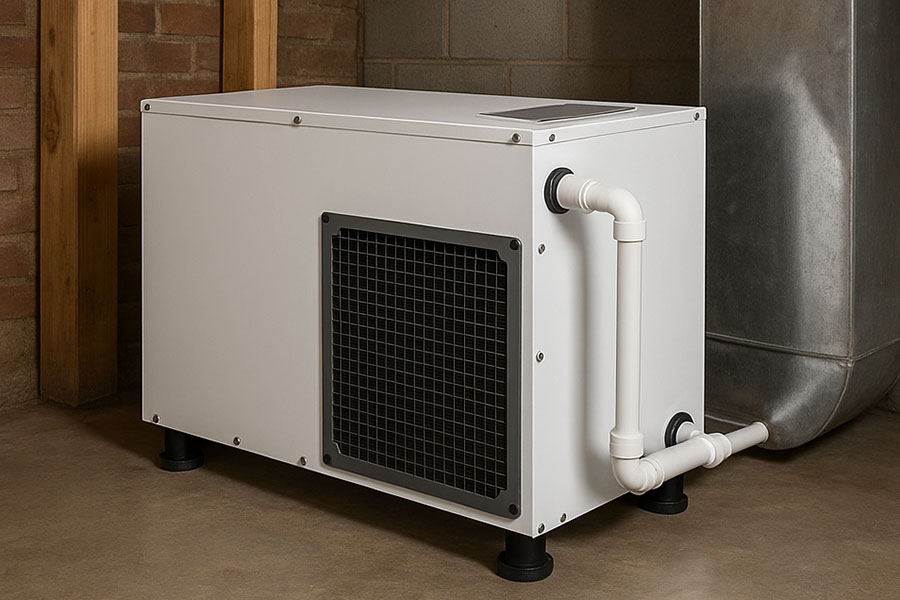
A whole-house unit treats every room served by your ductwork, drains automatically, and runs quietly outside your living space. Portable units treat one room, require manual emptying or a nearby drain, and add heat and noise to the space they are in. For a moisture problem affecting the whole house, the whole house unit is the appropriate tool.
How long does a whole-house dehumidifier last?
Most whole-house dehumidifiers are rated for roughly the same service life as other HVAC equipment when maintained properly. Filter changes, coil cleaning, and clear drainage are what determine whether a unit reaches that range or falls short of it. Annual service alongside your regular HVAC maintenance is the practical approach.
Can high humidity damage my Grand Prairie home?
Sustained high humidity supports mold growth, causes wood flooring and trim to swell and cup, promotes corrosion on metal fixtures, and creates conditions that dust mites reproduce in. The damage tends to be gradual rather than dramatic, which is why it often goes unaddressed until it becomes visible or someone in the household develops symptoms.
Getting Comfortable Again in Your Grand Prairie Home
Humidity is the part of home comfort most homeowners never measure, which is why it goes unaddressed for years. If your house feels sticky at a thermostat setting that used to feel fine, if windows fog, or if a musty smell keeps returning, the number on a hygrometer will tell you more than the number on your thermostat. When you want a professional read on what your home actually needs, request a free estimate and we will start with measurements rather than assumptions.