

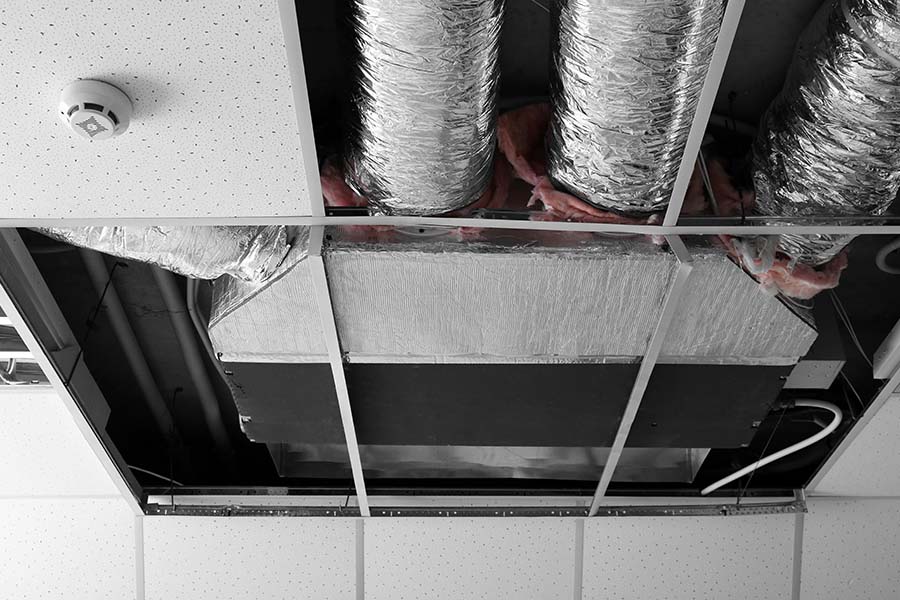
Your Haltom City home likely needs air duct sealing if you notice uneven room temperatures, unexplained energy bill increases, excess dust, odors coming from vents, visible duct damage, or high indoor humidity. Leaking ductwork lets conditioned air escape into attics and wall cavities before it ever reaches your rooms, which forces your system to run longer for worse results. Across Haltom City and the surrounding neighborhoods, duct leakage is one of the most common and most overlooked comfort problems we find, particularly in the older postwar homes off Broadway Avenue, where ductwork has been patched and extended over decades. Here are the ten signs worth acting on.
What Are the Signs of Poor Airflow in Your Home?
Poor airflow shows up as uneven temperatures between rooms, weak air at some registers, and long run times that never quite reach the setpoint. Those symptoms almost always point to a delivery problem rather than an equipment problem.
If one bedroom sits stuffy while another runs cold, the air is not arriving where it should. Drafts and musty odors reinforce that reading, because both indicate the system is pulling air from spaces it was never meant to touch.
Pay attention to how long your system runs to hit the thermostat setting. When it takes noticeably longer than it used to, the equipment is compensating for losses somewhere between the air handler and the room.
Compare your registers directly. Hold your hand at each one. A significant difference in air velocity between vents on the same trunk line is a strong indicator of leakage or a disconnection upstream.
These symptoms rarely resolve on their own, and they get more expensive to ignore. Sealing addresses the cause, while professional duct cleaning addresses what has already accumulated inside the system.
Why Are Your Energy Bills Spiking Without Explanation?
Unexplained energy bill increases usually mean your system is paying to condition air that never reaches you. Industry testing consistently finds that leaky residential duct systems lose a meaningful share of conditioned air before delivery, and every bit of that loss shows up on your statement.
When conditioned air escapes through gaps, open seams, or failed connections, your equipment runs longer cycles to compensate. Longer cycles mean higher consumption, more wear, and a shorter service life for the unit.
Homeowners often write these increases off as seasonal, and sometimes that is correct. What is not normal is a bill that climbs year over year for the same weather and the same thermostat settings.
Sealing restores the delivery path so the capacity you already paid for actually reaches your living space. In older Haltom City homes where additions and remodels have been tied into original trunk lines, custom ductwork services often make more sense than patching a system that was never sized for its current layout.
The fix is not glamorous, but it is one of the few HVAC investments that pays back every single month.
Why Is There So Much Dust and Allergen Buildup?
Excess dust settling on surfaces means your ductwork is pulling in unfiltered air from unconditioned spaces. Return side leaks are the usual culprit, and they bypass your filter entirely.
A return duct with an open seam in a hot attic does not draw clean air from your hallway. It draws attic air, insulation fibers, and whatever else is up there, then distributes it through every supply register in the house.
That is why homeowners describe dusting more often without any change in habits, and why allergy symptoms worsen indoors rather than outdoors. Regular cleaning treats the result and leaves the mechanism in place.
Inspect accessible ductwork for gaps at connections, at plenum joints, and at register boots. Anything you can see is usually accompanied by more that you cannot.
Sealing the return side is what actually reduces the load. Filtration helps at the margins, but no filter can keep up with a system that is actively importing unfiltered attic air on every cycle.
What Do Unpleasant Odors From Your Vents Mean?
Odors coming from your vents mean something is either growing inside your duct system or being pulled into it from outside the conditioned space. Both indicate a sealing problem, and both are worth diagnosing quickly.
What Causes Common Duct Odors?
A musty smell typically indicates moisture and microbial growth inside the ductwork, often where warm, humid air contacts a cold duct surface.
A burnt or scorched odor points to dust accumulation on heating components or an overheating part, and it deserves prompt attention rather than a wait-and-see approach.
A sweet chemical smell can indicate a refrigerant leak, which is both an efficiency problem and a repair that should not be delayed.
A foul or sewage-like odor sometimes means an animal has died inside the duct run, and sometimes it means a plumbing vent issue nearby is being drawn into a leaking return.
Each of these has a different cause and a different fix, which is why a smell is worth investigating rather than masking.
What Health Risks Come With Duct Odors?
Persistent duct odors carry real health implications, not just discomfort. Mold spores circulating through a supply system can aggravate respiratory conditions, trigger allergy symptoms, and create ongoing irritation for sensitive household members.
Chemical odors can indicate leaks from appliances, stored products, or building materials being drawn into the airstream. Repeated low-level exposure is the concern, because it happens continuously rather than in a single noticeable event.
Ignoring the smell does not make the source go away. It just means the source keeps distributing through every room on the system.
Why Does Sealing Solve the Odor Problem?
Sealing solves duct odors by cutting off the path between the contaminated space and your airstream. When ducts are sealed properly, attic air, crawlspace air, wall cavity air, and everything they carry stay out of the system.
The secondary benefits follow from the same fix. Sealed ducts waste less energy, reduce strain on the equipment, and stop redistributing whatever is settling in unconditioned areas of the house.
An odor is your system telling you where it is leaking. It is worth listening to.
Why Are Some Rooms Hotter or Colder Than Others?
Rooms hold different temperatures because the ducts serving them are losing air before it arrives. This is the single most common comfort complaint we hear, and duct leakage explains the majority of cases.
When a supply run develops leaks or a disconnected joint, the conditioned air intended for that room ends up in the attic instead. The room never reaches the setpoint, and the thermostat keeps calling because the space it monitors is satisfied while others are not.
Rooms farthest from the air handler suffer most, since they have the longest duct runs and the most opportunity for loss along the way. Bonus rooms over garages and additions built onto older Haltom City homes are frequent offenders.
Inconsistent temperatures do not just cost comfort. They cost money because the system runs extended cycles trying to satisfy a demand it structurally cannot meet.
Proper sealing brings the whole house back onto the same delivery curve, which is what makes room-to-room balance possible in the first place.
Why Does Your HVAC System Cycle So Frequently?
Frequent cycling means your system is reaching and losing setpoint faster than it should, and duct leakage is a leading cause. Short bursts of operation instead of steady, complete cycles put unnecessary wear on components designed to run continuously.
You may feel comfortable in one room while another stays uncomfortable, which is the signature of poor distribution rather than insufficient capacity.
Each start and stop draws more power than steady operation, so short cycling raises your bill while delivering less comfort. Over time, it shortens compressor and blower life.
Leaking ducts contribute by allowing conditioned air to escape immediately after it leaves the equipment. The system satisfies the thermostat, shuts down, loses the conditioned air it just produced, and starts again.
Sealing lets the system complete full cycles, which is how it was engineered to operate.
What Does Visible Duct Damage Actually Cost You?
Visible duct damage costs you conditioned air, comfort, and equipment life, and it never improves on its own. Cracks, open seams, crushed flex runs, and fully disconnected sections are all direct losses.
When a section disconnects in an attic, you are heating and cooling the attic. The thermostat responds by running the system longer, and you pay for every minute of it.
Check accessible runs in the attic, garage, or crawlspace if you can do so safely. Look at joints, at boots where ducts meet ceiling registers, and at any place the duct changes direction or diameter.
Damage also compromises air quality by opening a path for insulation fibers, dust, and pests. That combination of comfort loss, cost, and contamination is why duct issues escalate quickly when left alone.
Older ductwork is often uninsulated or poorly insulated as well, and properly insulated ductwork is what keeps sealed ducts from simply losing energy through the duct wall instead of through the seams.
Why Is Indoor Humidity Staying High?
High indoor humidity often means your duct system is drawing moist unconditioned air into the house. Attic and crawlspace air carries far more moisture than conditioned indoor air, and a leaking return introduces it continuously.
Condensation on windows or interior walls is the visible symptom. The invisible one is a system that runs longer, trying to overcome a moisture load it was never sized to handle.
North Texas humidity swings sharply, and Haltom City homes with original ductwork tend to feel it most during the transition seasons when the system runs intermittently.
Sealing the ducts removes the moisture pathway, which usually does more for indoor humidity than any single appliance addition. It also improves comfort at higher thermostat settings, since drier air feels cooler at the same temperature.
Do Renovations and Additions Cause Duct Problems?
Renovations and additions frequently cause duct problems because the existing system was designed for the original floor plan. Adding square footage without adjusting the ductwork leaves the whole house underserved.
How Do Renovations Increase Air Leakage?
New construction work disturbs existing duct runs. Framing crews move ducts, drywall crews crush flex, and additions get tied into trunk lines that were never sized to carry the extra load.
Signs of post-renovation leakage include:
- Cold spots that appeared only after the project finished
- Energy bills that stepped up and stayed up despite unchanged habits
- Noticeably more dust and allergens circulating through the home
A duct system that worked before a remodel often does not work after one, and the connection is easy to miss because the symptoms arrive gradually.
How Does Disrupted Insulation Affect Performance?
Disturbed insulation lets conditioned air lose energy through the duct wall even when the seams are tight. Gaps and compressed batts around duct runs create the same losses as leaks, just through a different mechanism.
If ductwork was not resealed and reinsulated during the project, dust and allergens from the construction phase can continue circulating for months. Post-renovation is exactly the right moment for an inspection, because it is the cheapest time to correct what the project changed.
What Do You Actually Gain From Professional Duct Sealing?
Professional duct sealing delivers three measurable outcomes: more consistent temperatures room to room, lower energy consumption, and cleaner indoor air. Those are the results homeowners notice within the first full billing cycle.
- Improved air quality: Sealed ducts stop pulling attic, garage, and crawlspace air into your living space.
- Energy savings: Conditioned air reaches the rooms you paid to condition instead of the spaces you did not.
- Extended equipment life: Shorter run times and complete cycles reduce wear on the compressor and blower motor.
Professional sealing also comes with diagnosis. A technician identifies which runs are leaking, whether the system is properly sized for the current floor plan, and whether sealing alone will solve the problem or whether portions of the ductwork need replacement.
That distinction matters. Sealing a duct system that is undersized for the house improves it without fixing it, and knowing the difference before you spend money is the whole point of a professional assessment.
Frequently Asked Questions
How much conditioned air does a leaky duct system actually lose?
Industry testing has consistently found that typical residential duct systems lose a substantial share of conditioned air to leakage, often in the range of 20 to 30 percent. The exact figure depends on the age of the system, the materials used, and how much of the ductwork runs through unconditioned space. A technician can measure your specific system rather than estimate it.
How do I know if my Haltom City home has duct leakage or just needs a bigger unit?
Duct leakage and undersized equipment produce similar symptoms, which is why guessing is expensive. The distinguishing sign is room-to-room inconsistency. An undersized system struggles evenly across the house, while a leaking duct system leaves specific rooms behind. A load calculation and a duct inspection settle the question definitively.
Can I seal my own ducts with duct tape?
Standard duct tape is not a durable duct sealing material and tends to fail within a few seasons, particularly in hot attics. Mastic sealant and foil-backed tape rated for the application hold up far better. More importantly, the leaks that cost you the most are usually in places homeowners cannot reach or see, which is why a professional inspection finds losses a visual check misses.
How long does professional duct sealing take?
Most residential duct sealing jobs are completed in a single day, though the timeline depends on the size of the home, the accessibility of the ductwork, and how much of the system needs attention. Homes with attic access throughout tend to go faster than those with ducts routed through tight crawlspaces or finished ceilings.
Should I seal ducts before or after replacing my HVAC system?
Seal or correct the ductwork before or at the same time as equipment replacement. Installing new high-efficiency equipment onto a leaking duct system means paying for capacity that never reaches your rooms. Addressing distribution first also affects the load calculation, which can change what size equipment you actually need.
Sealing the Gaps in Your Haltom City Home
Duct sealing is one of the few HVAC investments that improves comfort, lowers operating cost, and cleans up indoor air at the same time. If you have noticed uneven temperatures, climbing bills, or dust that keeps coming back, the ductwork is the first place to look, especially in homes where decades of remodels have been tied into the original system. When you are ready for a straight assessment of what your ducts are actually doing, contact our team today and we will take a look.