

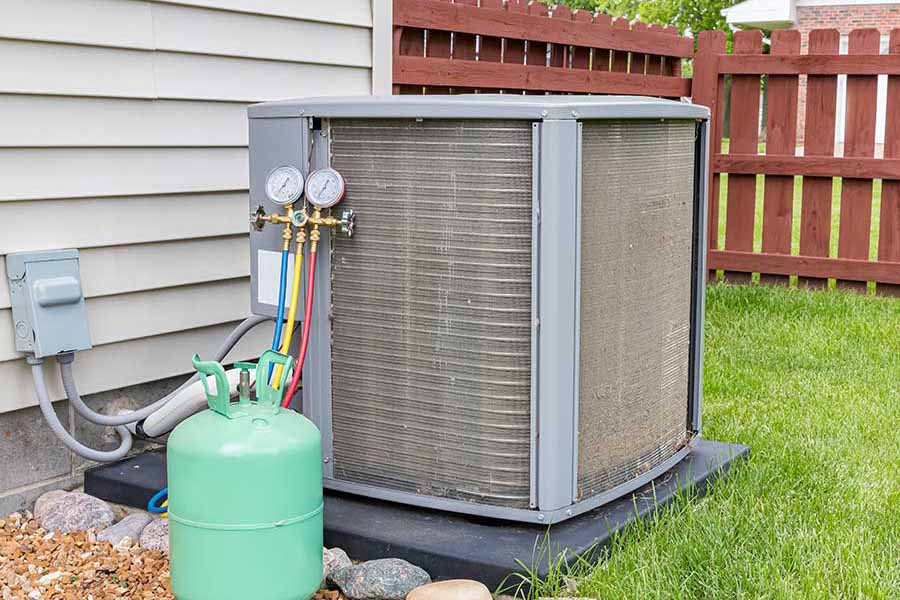
Dirty AC coils show up as longer run times with less cooling, unusual hissing or banging noises, rising energy bills, ice forming on the coil or refrigerant lines, and stale or humid indoor air. Coils are where your system moves heat, and a layer of dirt on that surface directly blocks heat transfer. Based on what we see in Arlington homes, coil fouling is one of the most common reasons a system that is only a few years old starts underperforming in July. Catching it early is the difference between a cleaning and a compressor.
What Are the Common Signs of Dirty AC Coils?
The clearest sign of dirty coils is a system that runs and runs without bringing the house down to setpoint. Your equipment is producing cooling, but the dirt layer is preventing that cooling from transferring efficiently.
Unusual noises are the next signal. Hissing can indicate a refrigerant issue developing from restricted heat transfer, and banging or rattling suggests the system is straining under conditions it was not designed for.
Energy bills tell the same story from a different angle. When coils are dirty, the unit works harder for the same result, and consumption climbs even though your habits have not changed.
Ice forming on the evaporator coil or the refrigerant lines is a more advanced symptom. Restricted airflow across a dirty coil drops the coil temperature below freezing, and once ice forms, cooling capacity collapses.
Finally, watch your indoor air. Musty odors and lingering humidity often trace back to a dirty evaporator coil, since a fouled, damp coil surface is exactly the environment microbial growth prefers. Consistent professional AC service is what keeps that surface clean between seasons.
How Do Dirty Coils Impact Your HVAC Efficiency?
Dirty coils reduce efficiency by insulating the surface where heat exchange happens. Even a thin layer of dust and grime measurably lowers the amount of heat your system can move per cycle, and the equipment compensates by running longer.
That compensation cascades into three specific costs:
- Higher energy bills: The system consumes more electricity to deliver the same cooling, and the gap widens as fouling accumulates.
- Shortened equipment lifespan: Extended run times and elevated head pressure accelerate wear on the compressor, the most expensive component in the system.
- Degraded indoor air quality: A dirty evaporator coil sits directly in the airstream, so whatever is on it gets distributed through the house.
During an Arlington summer, when systems already run near capacity for weeks at a time, that added strain matters more than it would in a milder climate. A system fighting dirty coils through a stretch of triple-digit afternoons along the I-20 corridor is operating with no margin left.
Coil condition is not a comfort detail. It is one of the primary variables determining whether your equipment reaches its expected service life or fails years early.
What Causes AC Coils to Get Dirty?
Coils get dirty because every particle circulating in your home eventually contacts them. The evaporator coil sits directly in the return airstream, and anything the filter misses lands on that wet surface and stays.
Airborne dust and debris are the primary source. As the system pulls air through the return, it carries in whatever is suspended in the house, and the coil acts as a secondary filter; it was never designed to be.
Humidity compounds the problem. A wet coil holds particulate that a dry surface would shed, and in the high humidity stretches North Texas gets each summer, that accumulation happens fast enough to matter within a single season.
Restricted airflow accelerates everything. Blocked supply vents, closed off rooms, and a loaded filter all force the system to work harder, which pulls more air through a smaller effective opening and concentrates deposits on the coil face.
Pet dander and fur are significant contributors in homes with animals. So is proximity to construction, and Arlington has plenty of active development where fine dust travels well beyond the site.
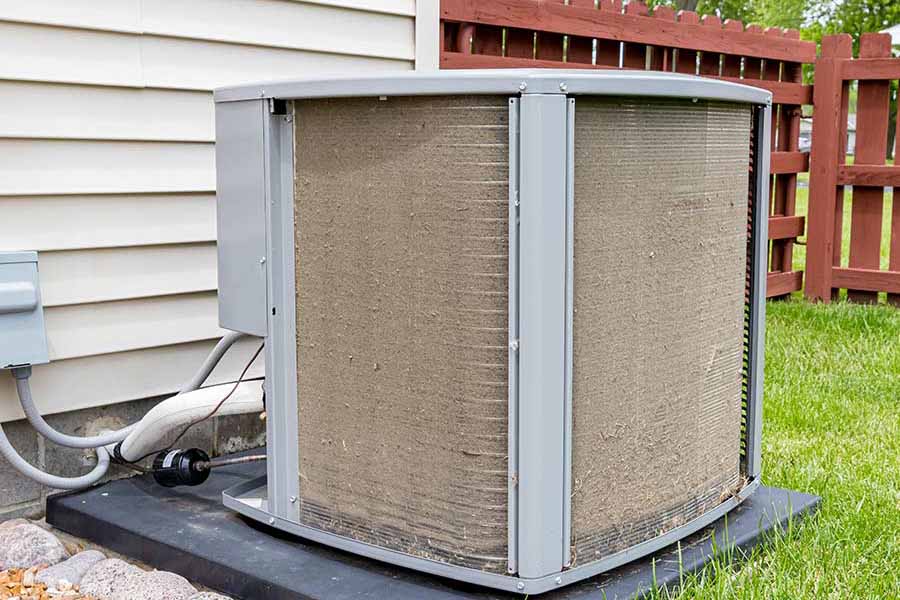
The outdoor condenser coil has its own problem set, collecting grass clippings, cottonwood fluff, and yard debris. What ties all of it together is the maintenance interval. Regular duct cleaning and system service remove the accumulated load before it reaches the point of affecting performance.
What Does Proper Coil Maintenance Involve?
Proper coil maintenance involves safely de-energizing the equipment, clearing obstructions, cleaning both coil surfaces without damaging the fins, and verifying that the system returns to correct operating pressures afterward. That last step is where professional service separates from a weekend project.
There are things a homeowner can reasonably handle. Keeping the area around the outdoor unit clear of leaves, grass clippings, and shrubs gives the condenser the airflow it needs. Maintaining at least two feet of clearance on all sides costs nothing and prevents a real percentage of efficiency loss.
Changing filters on schedule is the single highest value habit available to you. Every particle the filter catches is a particle that never reaches the coil.
The rest is worth leaving to a technician, and not because it is complicated to describe. Coil fins are thin aluminum that bends under light pressure, and bent fins restrict airflow permanently. Evaporator coils are often difficult to access without partially disassembling the air handler. Coil cleaning chemicals require correct dilution and complete rinsing, since residue attracts more dirt than it removes.
More importantly, a technician does not just clean. They measure. Superheat and subcooling readings, static pressure, and temperature split tell whether the coil was the actual problem or a symptom of something upstream. Cleaning a coil that is dirty because of a refrigerant charge issue solves nothing.
Expert AC repair addresses the underlying conditions that let coils foul quickly in the first place, which is what keeps the problem from returning next season. For most Arlington homes, professional coil service before the cooling season and a filter discipline you actually keep is the right combination.
When Should You Call for Professional Help?
Call for professional help as soon as your system stops holding setpoint, makes noises it did not make before, or shows visible ice on the coil or refrigerant lines. Each of those indicates the system is already operating outside its design conditions.
An unexplained spike in your energy bill deserves the same response. By the time inefficiency is large enough to see on a statement, the underlying cause has usually been developing for a while.
Water pooling around the indoor unit is a call today rather than a call next week. It typically means a clogged condensate drain or a frozen coil that has thawed, and both can cause water damage to ceilings and flooring while you wait.
Unpleasant odors coming through the vents warrant the same urgency, particularly a musty smell that appears when the system starts. That pattern points directly at the evaporator coil.
Minuteman Heating & Air sends experienced technicians who diagnose before they quote, explain what they found, and price the work honestly. Fast response matters most in an Arlington August, when a system being down for three days is not an inconvenience but a real problem.
Frequently Asked Questions
How often should AC coils be cleaned in an Arlington home?
Most Arlington homes benefit from professional coil inspection and cleaning once a year, typically during spring maintenance before the cooling season begins. Homes with pets, allergy sufferers, heavy dust, or nearby construction may need more frequent attention. Long cooling seasons in North Texas put more hours on the equipment than in milder climates, which shortens the practical interval.
Can dirty coils cause my AC to freeze up?
Yes. Dirty evaporator coils restrict airflow, which drops the coil surface below freezing and causes condensation to freeze rather than drain. Once ice forms, cooling stops almost entirely. If you see ice, shut the system off at the thermostat, leave the fan running to thaw the coil, and have it inspected before running it again.
Will cleaning my coils lower my energy bill?
Restoring proper heat transfer typically reduces run times, and shorter run times mean lower consumption. The size of the improvement depends on how fouled the coils were and whether other issues are also present. Coil cleaning is most effective as part of a full-service visit that also verifies refrigerant charge, airflow, and electrical condition.
What is the difference between the evaporator coil and the condenser coil?
The evaporator coil sits indoors in the air handler and absorbs heat from your home’s air. The condenser coil sits in the outdoor unit and releases that heat outside. Both get dirty, but from different sources. The indoor coil collects household dust and dander, while the outdoor coil collects yard debris, pollen, and cottonwood.
Is it worth repairing an older AC system with dirty coils?
For a system under roughly ten years old and otherwise in good condition, cleaning and service almost always makes sense. For an older system already showing refrigerant leaks, compressor strain, or repeated failures, a technician should walk you through repair versus replacement with actual numbers rather than a general rule. The right answer depends on the specific unit and its history.
Keeping Your Arlington Home Cool When It Matters
Clean coils are the difference between a system that coasts through a Texas summer and one that struggles for weeks before failing on the hottest day of the year. The warning signs are consistent and easy to recognize once you know what to listen and look for, and acting on them early is almost always the cheaper path. If your system is not cooling the way it did last summer, schedule your appointment today and we will find out why.