

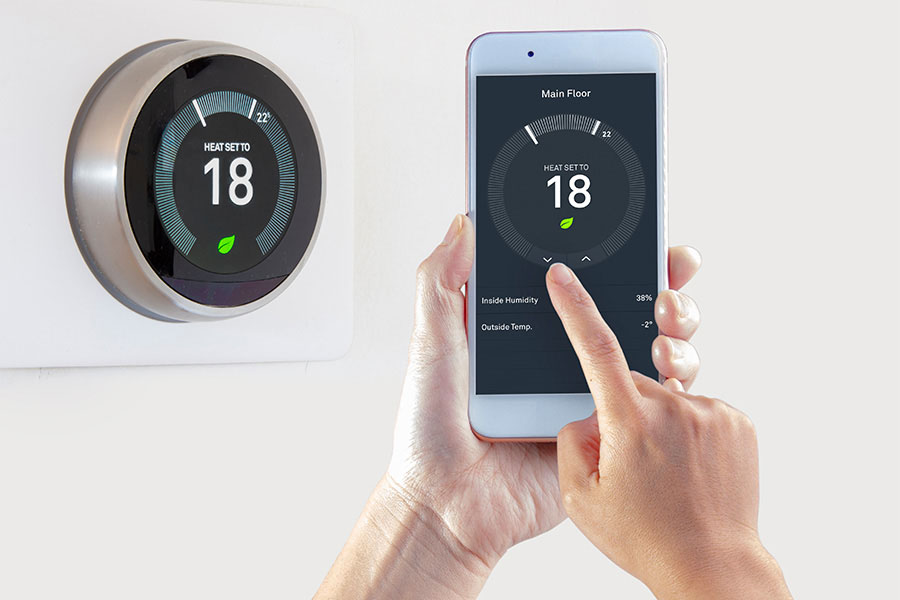
A smart thermostat lowers your energy bills by learning your household’s schedule and automatically reducing heating and cooling when nobody is home to benefit from it. It also gives you remote control from your phone, reports on where your energy is actually going, and adjusts for outdoor conditions without you touching anything. For homeowners across Roanoke, where a lot of households commute south toward Fort Worth or east toward the airport corridor, that unattended runtime is exactly where the savings hide. Here is how the technology works and how to get the most out of it.
How Do Smart Thermostats Optimize Energy Use?
Smart thermostats optimize energy use by matching your system’s runtime to actual occupancy instead of a fixed schedule. Conditioning an empty house is the single largest source of wasted HVAC energy in most homes, and it is the problem these devices were built to solve.
The learning process is automatic in most models. The thermostat observes when you leave, when you return, and what temperatures you adjust to, then builds a schedule around those patterns rather than requiring you to program one.
Remote control through a smartphone app closes the gap the schedule misses. Plans change, and being able to push the setpoint back from the road means an unexpectedly long day at the office does not cost you six hours of unnecessary cooling.
Real-time energy data is the underrated feature. Seeing how many hours your system ran yesterday, and at what outdoor temperature, turns an abstract bill into something you can actually act on.
Many models also pull local weather forecasts and precondition the home ahead of a temperature swing, which matters in North Texas, where a front can move the outdoor temperature 30 degrees in an afternoon. Getting the full benefit depends on the device being correctly wired and configured for your equipment, which is why professional thermostat installation is worth the small additional cost over a self-install.
What Are the Financial Benefits of a Smart Thermostat?
The financial benefit of a smart thermostat comes from three sources: reduced runtime when the house is empty, better setpoint discipline when it is occupied, and utility incentives that offset the purchase price. Together, they typically produce savings within the first full season.
- Energy efficiency through automation: The thermostat sets back temperatures during the hours nobody is home, without relying on anyone remembering to do it manually. Consistency is what turns a small daily saving into a meaningful annual one.
- Remote control that prevents waste: If you leave for a weekend and forget to adjust the thermostat, you can fix it from your phone in ten seconds instead of paying to cool an empty house for three days.
- Utility rebates and incentives: Many utility providers offer rebates or bill credit programs for qualifying smart thermostats. Availability and amounts vary by provider and change over time, so it is worth checking your specific utility’s current program before you buy.
There is a fourth benefit that does not show up as a line item. Shorter runtime means fewer operating hours on your compressor, blower motor, and heat exchanger, which extends equipment life.
The savings scale with how much of your home you can control independently. Pairing a smart thermostat with a zoned heating and cooling system lets you condition the rooms in use rather than the whole house, which is where the largest reductions come from in two-story Roanoke homes.
What Features Should You Look For in a Smart Thermostat?
Look for Wi-Fi connectivity, learning capability, detailed energy reporting, and confirmed compatibility with your specific HVAC system. Those four determine whether the device delivers on its promise or becomes an expensive wall decoration.
Wi-Fi connectivity and a reliable app are the baseline. Remote access is what converts a programmable thermostat into a smart one, and app quality varies more between brands than the hardware does.
Learning and adaptive scheduling is what removes the burden from you. A thermostat that adapts to your habits saves energy consistently, while one that requires manual programming saves energy only as long as you keep maintaining the program.
Energy usage reporting turns guesswork into information. Monthly runtime summaries and comparisons against previous periods show you whether a change actually helped.
HVAC compatibility is the one homeowners most often get wrong. Systems with heat pumps, multi-stage equipment, dual fuel setups, or no common wire all have specific requirements. A thermostat that technically powers on but cannot properly control auxiliary heat or a second stage will cost you money rather than save it.
Compatibility is also worth thinking about in the context of what else you might add later. Homes with a ductless mini split system serving a bonus room, garage conversion, or addition need controls that account for that zone rather than ignoring it.
How Do Smart Thermostats Improve Home Comfort?
Smart thermostats improve comfort by keeping the home at the right temperature at the right time without anyone managing it. Comfort and savings are usually framed as a tradeoff, and good automation is what removes that tradeoff.
- Personalized schedules: Set the house to start cooling before you get home from work rather than starting when you walk in the door. You arrive to a comfortable house without having paid to cool it all afternoon.
- Remote control: Adjust from anywhere, which matters most for irregular schedules, travel, and households where people come and go at different times.
- Adaptive learning: The thermostat refines its behavior over weeks, gradually reducing the number of manual overrides you need to make.
Geofencing extends this further by using your phone’s location to trigger setbacks and recovery automatically. For a household where everyone leaves at different times, it handles a schedule no fixed program could.
The result homeowners actually notice is fewer temperature swings. Instead of the house drifting warm and then getting blasted back down, a well-configured smart thermostat holds a steadier range with shorter, more efficient cycles.
How Do You Get the Most Savings From Your Smart Thermostat?
You get the most savings by setting a real schedule, using the energy reports, enabling location-based adjustment, and keeping the device updated. A smart thermostat left on factory defaults captures a fraction of its potential.
Start with the schedule. Program setbacks for the hours the house is empty and for overnight, and set the recovery to begin shortly before anyone returns. In North Texas, a setback of a few degrees during unoccupied hours produces meaningful savings across a long cooling season.
Use the energy-saving mode rather than treating it as optional. Most models widen the acceptable temperature range slightly during low occupancy periods, and the comfort difference is usually imperceptible, while the runtime difference is not.
Read the energy reports monthly. They show which changes worked, and they surface problems too. A sudden jump in runtime at unchanged outdoor temperatures is often the first sign of an equipment issue.
Enable geofencing if your household’s schedule is irregular. It captures the savings that fixed schedules miss.
Keep the firmware current. Manufacturers release efficiency improvements and bug fixes, and an outdated device sometimes loses features it shipped with.
One caution worth stating plainly: a smart thermostat cannot fix an inefficient system. If your equipment is undersized, your ducts are leaking, or your coils are dirty, the thermostat will document the problem accurately and save you very little.
Frequently Asked Questions
How much can a smart thermostat save on energy bills in Roanoke?
Actual savings depend on your current habits, your home’s insulation, your equipment’s efficiency, and how much the house sits empty. Households that previously left a fixed temperature running around the clock typically see the largest improvement, while households already practicing manual setbacks see less. The energy reports in the app will show your specific numbers within a couple of billing cycles.
Will a smart thermostat work with my existing HVAC system?
Most modern residential systems are compatible, but heat pumps, multi-stage equipment, dual fuel systems, and older systems without a common wire have specific requirements. Checking compatibility before purchase avoids a return trip, and a technician can confirm what your wiring supports in a few minutes.
Do I need a professional to install a smart thermostat?
Simple single-stage systems with an existing common wire are often straightforward. Heat pumps, two-stage systems, dual fuel setups, and systems missing a common wire benefit from professional installation because a miswired thermostat can lock out auxiliary heat, run the wrong stage, or damage the control board. A professional setup also includes configuring the device for your specific equipment rather than accepting defaults.
Is it better to set back the thermostat or leave it at one temperature?
Setting back while the house is empty saves energy in nearly all cases. The idea that a system works harder to recover than it saves during a setback does not hold for typical residential setbacks. Where care is needed is with heat pumps in winter, since a large setback can trigger expensive auxiliary heat during recovery, which is exactly the scenario smart thermostats are designed to manage intelligently.
Can a smart thermostat tell me if my HVAC system has a problem?
Indirectly, yes. Many models track runtime and send alerts when the system runs unusually long or fails to reach the setpoint. That data is often the earliest warning of a developing issue, though it identifies the symptom rather than the cause. A technician still needs to measure the system to determine what is actually happening.
Smarter Control for Your Roanoke Home
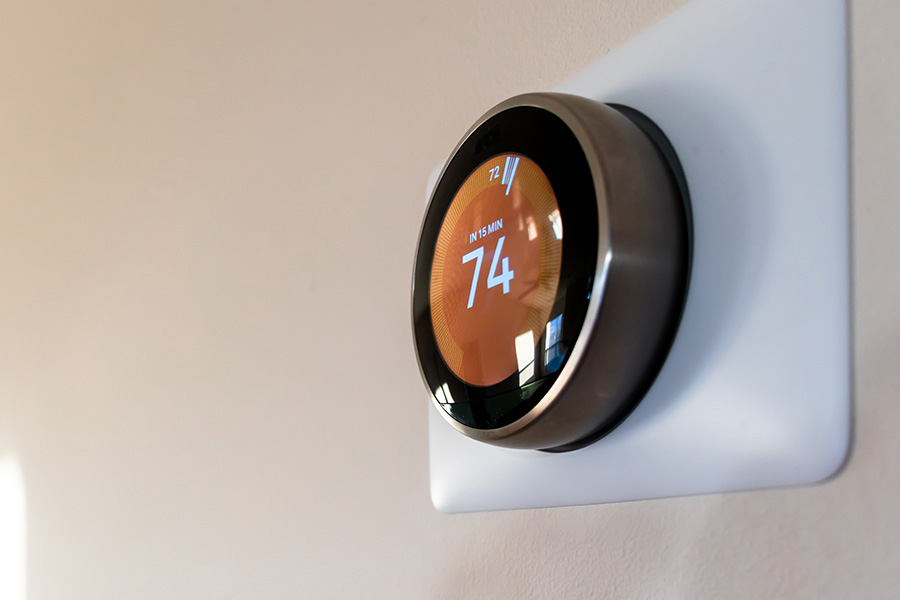
A smart thermostat is one of the few home upgrades that pays for itself while making the house more comfortable rather than less. The savings come from automation doing consistently what most of us intend to do manually and forget. If you want it wired correctly, configured for your specific equipment, and set up to actually deliver those savings, schedule your appointment today and we will handle it.