

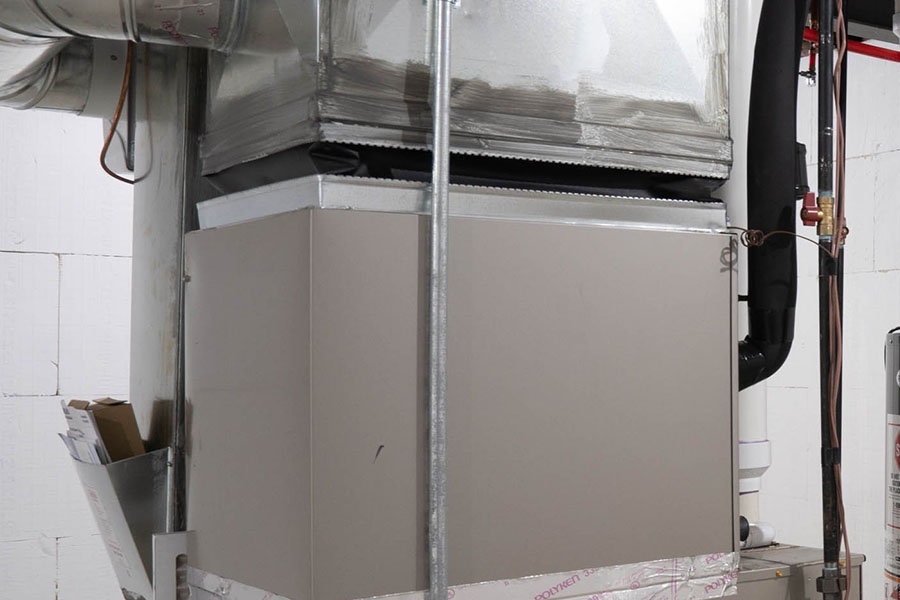
Your air handler is likely failing if you notice weak or inconsistent airflow, hissing or rattling noises, temperatures that swing between rooms, energy bills climbing without a change in usage, or unusual odors when the system runs. The air handler moves every cubic foot of conditioned air in your home, so when it weakens, the whole system underperforms even if the outdoor equipment is fine. In our work throughout Southlake, where larger homes often run multiple air handlers across separate zones, a single failing unit can make an otherwise healthy system feel broken. Here is what to watch for.
What Are the Common Symptoms of Air Handler Failure?
The most common symptom of air handler failure is airflow that drops noticeably at the registers while the system still appears to be running. The blower is the heart of the unit, and reduced output is the first thing homeowners feel.
Listen for sound changes. A hissing noise often indicates a duct connection problem or a refrigerant issue at the coil, while rattling and grinding point toward blower motor bearings, a loose blower wheel, or debris inside the cabinet.
Temperature inconsistency across the home is another reliable indicator. When one part of the house holds a setpoint and another does not, the air handler is no longer distributing at design capacity.
Energy bills tell the same story financially. A blower motor drawing more current to move less air raises your consumption while delivering less comfort, and that gap widens as the problem develops.
Unusual odors deserve immediate attention. A burning or electrical smell can indicate motor or wiring failure, and a musty smell usually points to moisture and microbial growth on the coil or in the cabinet. Timely heating repair at the first sign of either prevents a manageable problem from taking out the rest of the system.
Why Is Regular Maintenance Essential for Your Air Handler?
Regular maintenance is essential because the air handler accumulates dirt continuously and its bearings, belts, and electrical connections wear on a predictable schedule. Catching that wear during a service visit costs a fraction of what it costs after a failure.
Scheduled service keeps the blower wheel clean, which matters more than most homeowners expect. A blower wheel caked with dust moves measurably less air, and that restriction cascades into every other performance problem in the system.
A technician also catches the small failures that precede large ones. A capacitor drifting out of tolerance, a motor drawing high amperage, a loose electrical connection, or a partially blocked condensate drain are all inexpensive to correct and expensive to ignore.
Efficiency follows directly. A clean, properly adjusted air handler moves air at design rate, which lets the equipment complete normal cycles instead of running extended ones. That shows up on your utility bill every month.
Air quality benefits too. The blower compartment and coil sit directly in the airstream, so anything growing or accumulating there gets distributed through every room. Regular furnace and air handler service is what keeps that surface clean between seasons.
Noise is the last benefit and often the first thing homeowners notice after a service visit. A well-maintained unit runs quietly, and creeping noise is usually the earliest sign that something is wearing.
What Should You Look For When Your Air Handler Acts Up?
When your air handler acts up, start by observing four things: airflow strength at the registers, the sounds the unit makes, any water around the equipment, and whether the thermostat is actually holding the temperature it displays. Those observations tell a technician most of what they need before they arrive.
- Check the airflow: Weak air at the registers points to a restricted filter, a dirty blower wheel, closed or blocked returns, or a duct problem. Compare several registers, since a difference between them narrows the cause considerably.
- Listen for unusual noises: Banging and rattling suggest loose components or a blower wheel out of balance. A high-pitched squeal often means motor bearings. A click followed by a hum without startup usually points to a capacitor.
- Look for water: Pooling around the unit typically means a clogged condensate drain or a frozen coil that has thawed. Either can cause ceiling and flooring damage, so this one is time sensitive.
- Watch the thermostat: If the system never reaches the set temperature, the cause could be the thermostat itself, the air handler, or the outdoor equipment. Note how long it runs and how far off it stays, since that pattern is diagnostic.
Changing the filter and confirming that supply and return vents are unobstructed are both reasonable homeowner steps, and they resolve a real percentage of airflow complaints.
Beyond that, the work involves live electrical components, a sealed refrigerant circuit, and a blower assembly that requires proper balancing after removal. Expert AC repair covers the diagnostic measurements, static pressure, amperage draw, and temperature split, which turn a list of symptoms into an actual cause.
When Should You Call a Professional?
Call a professional as soon as the air handler makes a new mechanical noise, stops delivering conditioned air, leaks water, or trips a breaker. Each of those indicates the unit is operating outside its safe range.
Grinding or rattling means something is physically wrong inside the cabinet, and continuing to run it usually spreads the damage. A blower wheel that comes loose can destroy the housing and the motor together.
Water around the unit calls for a same-day response. Southlake homes frequently locate air handlers in attics above finished living space, and a blocked condensate drain in that position causes ceiling damage quickly.
An unexplained spike in your energy bill is a softer signal but a real one. It usually means the system has been working harder for weeks before anything became obvious.
A breaker that trips repeatedly is not a nuisance to reset. It is a protective device doing its job, and repeated tripping points to a motor drawing excessive current or a short developing in the wiring.
Professional workmanship matters here because air handler repairs involve refrigerant circuits, high voltage components, and airflow balancing that has to be verified by measurement. A technician tests the system under load before leaving rather than assuming the repair worked.
What Do You Gain by Repairing an Air Handler Early?
Repairing an air handler early costs less, protects the rest of the system, and restores the efficiency you have been paying for without receiving. The economics favor early action in every direction.
- Lower repair costs: A capacitor, a bearing, or a control board caught early is a routine repair. The same fault left to run can take out the motor, and a motor failure sometimes takes the coil or the control board with it.
- Restored efficiency: A properly functioning air handler moves air at design rate, which shortens run times and lowers consumption immediately.
- Extended equipment life: The outdoor unit depends on correct indoor airflow. Running a compressor against a restricted air handler is one of the most common causes of premature compressor failure.
- Better indoor air quality: A clean blower compartment and coil stop redistributing dust, moisture, and microbial growth through the house.
There is a scheduling benefit as well. Repairs made on your timeline are easier to plan than emergency calls made in July or January, when demand across the Metroplex is highest and availability is tightest.
Small symptoms are the cheapest information your system will ever give you. Acting on them is what keeps a service call from becoming a replacement quote.
Frequently Asked Questions
How long does an air handler last in a Southlake home?
Most residential air handlers are designed for a service life in the range of 15 to 20 years with regular maintenance. Units installed in unconditioned attic space, which is common in Southlake, often see more thermal stress than those in conditioned utility rooms. Filter discipline and annual service are the two variables with the largest effect on where a specific unit lands in that range.
Can I replace just the air handler without replacing the outdoor unit?
Sometimes, but it needs to be evaluated rather than assumed. The indoor and outdoor units are matched as a system for capacity, refrigerant type, and efficiency rating. Pairing a new air handler with an older condenser can reduce performance, void warranty coverage, or be outright incompatible if the refrigerants differ. A technician can tell you quickly whether your specific pairing works.
Why is my air handler leaking water in the attic?
The most common cause is a clogged condensate drain line, which backs water up into the drain pan and over the edge. A frozen evaporator coil that thaws produces the same result. Both are urgent when the unit sits above finished space, and most attic installations include a secondary pan and float switch specifically to catch this failure.
What does it mean if my air handler runs constantly?
Constant operation can mean the thermostat fan setting is on rather than auto, which is harmless, or that the system cannot reach the setpoint, which is not. If the fan setting is correct and the house still is not reaching temperature, the cause is usually restricted airflow, a refrigerant issue, or undersized capacity for the load. Measuring is the only way to distinguish them.
Should I repair or replace a failing air handler?
For a unit under roughly ten years old with a single failed component, repair usually makes sense. For an older unit with a failed motor or coil, particularly one paired with aging outdoor equipment or a phased-out refrigerant, replacement often costs less over the following five years. A technician should show you the numbers for both paths rather than making the call for you.
Keeping Air Moving in Your Southlake Home
The air handler is the component homeowners think about least and depend on most. Weak airflow, new noises, uneven temperatures, and climbing bills are all it can do to tell you something is wrong, and every one of those signs is cheaper to address this month than next season. If your system is not moving air the way it used to, contact our team today and we will find out why.